
Coconut in Tea: Dried Flakes, Oolong Blends and Allergens
Updated 2026-09-15
Reviewed by tea master Ms. Judy (Wang Mengyu)
The coconut (yezi, 椰子) is the taste of China's deep south: the palm-lined island of Hainan lives on coconut groves, and an old southern chronicle calls the fruit the “head of the King of Yue” - a legend as dramatic as the nut is peaceful.
Taste and aroma in tea
In tea blends coconut plays the role milk plays in a latte: dried coconut flakes give the infusion a soft, creamy sweetness and a rounder body. It flatters oolong (coconut oolong is a modern southern classic), and in caffeine-free floral blends it quietly binds bright flower and fruit notes into one smooth, rounded cup.
In the Chinese tradition
Coconut is Hainan's emblem: coconut water, coconut rice steamed in the shell, coconut sweets are the island's everyday pleasures. In traditional thinking the flesh is nourishing and gently warming while the water cools and quenches - the fruit carries its own remedy for the tropical heat it grows in.
How to brew
Coconut is unhurried: brew blends containing it with water at 85–95 °C and give them a full 3–4 minutes. The flakes release their creamy sweetness gradually and keep giving over several infusions. Blends with coconut are also excellent iced.
How it is harvested and prepared
The coconut in a blend is made from fully mature coconut kernel, dried under controlled hot air. Growers wait until about eleven or twelve months, when the husk has turned brown and the meat inside has grown rich and full, a depth a young green nut hasn't reached yet. Traditionally they are hand-picked by climbers, or cut with a knife on a long bamboo pole.
The kernel is de-husked, the brown skin pared off, then blanched and dried hot until barely any moisture is left: this is the "desiccated coconut" and coconut chips you meet in tea. The palms fruit year-round, so pickers return to the same trees in cycles of about a month, and most of the world's desiccated coconut ships from the Philippines and Indonesia. Ours is the plain kind - no sugar, no bleaching - and we confirm that with the supplier.
On our shelf
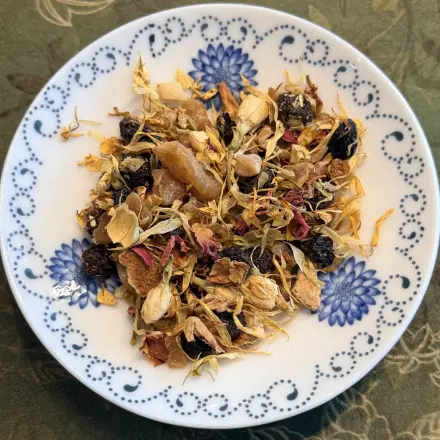
Coconut rounds out our Caffeine-Free Floral & Fruit Blend, where its flakes soften rose, jasmine, peach and orange into one smooth cup. In the blend builder coconut is a 40 ฿ add-on (about eight grams to a part of a 100 g pouch, up to three parts), the piece we reach for when a fruit or floral blend wants body without milk.
Is coconut in tea a nut allergen?
Yes, for some people. Coconut is treated as a tree nut in allergen labelling, so anyone who reacts to tree nuts should skip blends that carry it, or ask us first. The amount in a cup is small, but a real allergy doesn't care about the dose.
Notes on traditional properties are part of Chinese tea culture and are not medical advice.