
Pu-erh Tea: Raw and Ripe, Yunnan Cakes and Why It Matures
Updated 2026-08-29
Reviewed by tea master Ms. Judy (Wang Mengyu)
Pu-erh (pu’er cha, 普洱茶) is the famous post-fermented tea of Yunnan, named after the town of Pu’er through which tea caravans passed for centuries. It is the one tea that people lay down: time does not spoil it - it matures.
Two paths of one tea
Pu-erh comes in two kinds. Sheng pu-erh is “raw”: pressed sun-dried leaf that ripens on its own over decades, from ringing freshness to deep copper. Shou pu-erh is “ripe”: the wet-piling technique gives it a dark, velvety, earthy character in a matter of weeks. Same leaf - different destinies.
In the Chinese tradition
Pu-erh is pressed into cakes, bricks and nests, wrapped in paper and bamboo, inscribed and stored - a good cake only gains value with the years. Portioned mini cakes are a modern continuation of the same tradition: one small cake for one tea session, no knife or scales needed. In traditional thinking pu-erh “warms”, helps after a rich meal and turns a table into a long, unhurried conversation.
How to brew
Hot water at 95–100 °C, short steeps, and a discarded first pour to rinse and open the pressed leaf. Pu-erh is generous: both sheng and shou hold many infusions, and shou can even be simmered. Exact parameters, steep by steep, are in the pu-erh brewing guide; the raw-or-ripe choice is untangled in sheng vs shou, and if a cake is going to live with you for years - how to store it.
Pu-erh belongs to dark tea, one of the six Chinese categories; the Chinese tea types guide puts all six side by side.
Shop Pu-erh Tea in our catalog →
Notes on traditional properties are part of Chinese tea culture and are not medical advice.
Buy these teas
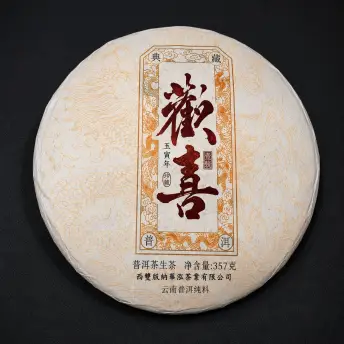 Joy Sheng Pu-erh (2023)
from 1280 THB
View this tea
Joy Sheng Pu-erh (2023)
from 1280 THB
View this tea
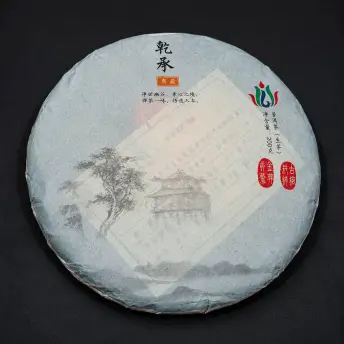 Nuo Wu Sheng Pu-erh (2018)
from 950 THB
View this tea
Nuo Wu Sheng Pu-erh (2018)
from 950 THB
View this tea
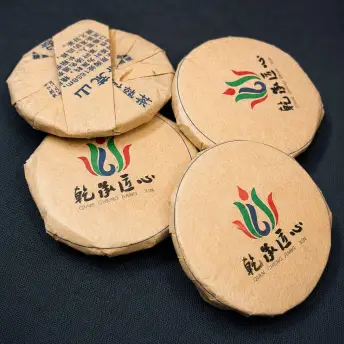 Ancient Tree Raw Pu-erh (Sheng) Mini Cake
from 140 THB
View this tea
Ancient Tree Raw Pu-erh (Sheng) Mini Cake
from 140 THB
View this tea
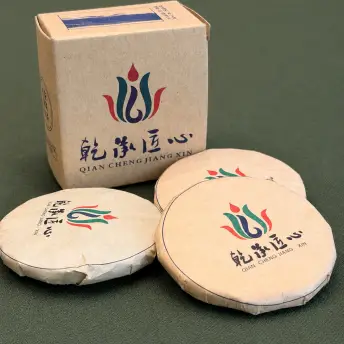 Ancient Tree Trio
380 THB
View this tea
Ancient Tree Trio
380 THB
View this tea
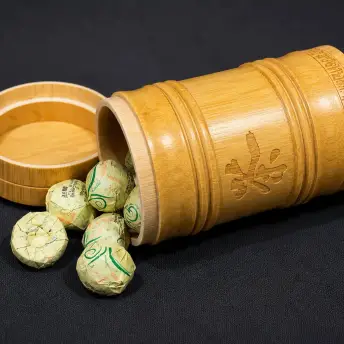 Bamboo Tea Caddy with Mini Pu-erh
from 910 THB
View this tea
Bamboo Tea Caddy with Mini Pu-erh
from 910 THB
View this tea
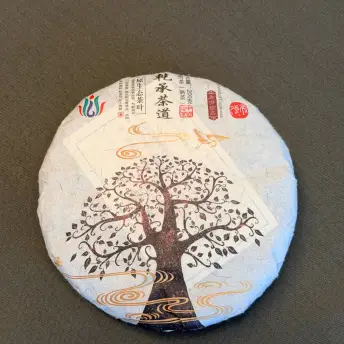 Imperial Gong Ting Ripe (Shu) Pu-erh (2018)
from 750 THB
View this tea
Imperial Gong Ting Ripe (Shu) Pu-erh (2018)
from 750 THB
View this tea
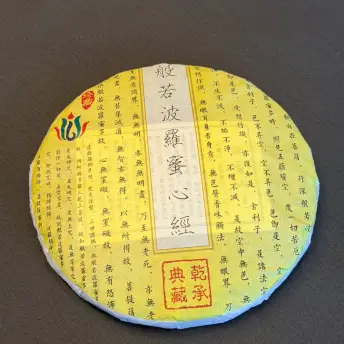 Wuliang Mountain Sheng Pu-erh (2019)
from 1300 THB
View this tea
Wuliang Mountain Sheng Pu-erh (2019)
from 1300 THB
View this tea
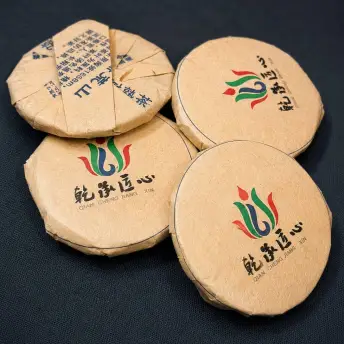 Ancient Tree Ripe Pu-erh (Shou) Mini Cake
from 130 THB
View this tea
Ancient Tree Ripe Pu-erh (Shou) Mini Cake
from 130 THB
View this tea
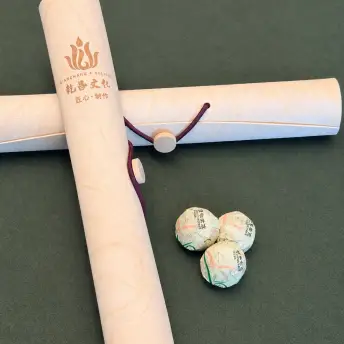 Sticky Rice Aroma Mini Pu-erh Gift Box
380 THB
View this tea
Sticky Rice Aroma Mini Pu-erh Gift Box
380 THB
View this tea
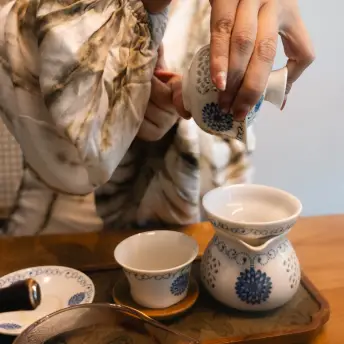 Chinese Tea Ceremony Experience in Phuket
2000 THB
View product
Chinese Tea Ceremony Experience in Phuket
2000 THB
View product