
Rosebud Tea: Which Rose the Buds Come From, and Brewing
Updated 2026-09-25
Reviewed by tea master Ms. Judy (Wang Mengyu)
Rose (meigui, 玫瑰花) in Chinese tea culture means above all the buds and petals of the tea rose: deep pink, with a warm, honeyed floral aroma quite unlike the perfumed “rosiness” of European confectionery.
Taste and aroma in tea
Rose petals and buds are added to black tea and to flower blends. Rose and black tea suit each other especially well: the strong, malty base gives the floral aroma something to lean on, and the cup turns out soft and round with a light natural sweetness. The buds are also brewed on their own for a gentle infusion that smells of a rose garden.
In the Chinese tradition
Traditional thinking links the rose with the movement of qi - it is said to “unknot” stagnation, soften the mood and restore lightness. That is why rose tea has long been considered a womanly, heart-warming drink in China: people take it to warm up, settle down and lift the spirits. Rose petals also find their way into desserts and the famous rose jam of Yunnan cuisine.
How to brew
Rose is undemanding: it takes hot water at 90–95 °C well and opens up from the very first pour, so rose tea forgives both the teapot and a simple mug.
How it is harvested and prepared
Tea roses are picked as half-open buds before sunrise. In Pingyin county in Shandong - “the hometown of roses”, and the source of China’s registered edible double-petal red rose, pickers work the May fields by headlamp in the pre-dawn hours. The oils are richest before sunrise, so the pick is a race against the light: buds are taken dew-wet at the “half-cup” stage, when their scent is at its fullest. China’s other rose-tea regions are Yunnan, with its Lijiang golden-edge rose, and Gansu.
Sorted buds go straight to gentle low-temperature drying, which holds their colour and scent. Pingyin producers describe staged heat-pump drying kept below about 55 °C over roughly a day; others shade-dry in open air, use hot air, or vacuum freeze-dry - the method that best keeps the shape and colour, according to published food-science comparisons. The dried buds are then sieved clean of loose petals and stem, cooled, and sealed against moisture.
On our shelf
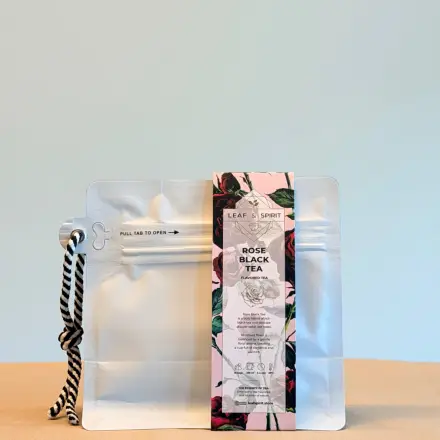
Our Rose Black Tea leans the buds on a strong, malty base - the tea gives the floral aroma something to stand on, and the cup comes out soft and round. Rose is in our caffeine-free floral & fruit blend too, next to jasmine, chrysanthemum and peach. In the blend builder it’s a 40 ฿ add-on, up to three portions, and it’s the base of one of our ready-made presets: black tea with rose and a little lychee. Next to lavender rose takes the softer half of the pair: honey from the rose, a cool edge from the lavender.
What kind of rose is used in tea?
Chinese tea rose means the buds and petals of edible cultivated roses - deep pink, with a warm honeyed scent quite unlike perfumed confectionery rose. The best-known food-grade source is Pingyin in Shandong, with more grown in Yunnan and Gansu; buds are picked half-open before dawn to keep the oils in. Ornamental garden roses are a different thing and aren’t meant for the cup.
Shop Black Tea in our catalog →
Notes on traditional properties are part of Chinese tea culture and are not medical advice.