
Lychee Black Tea: Scented, Real Fruit or Flavoured
Updated 2026-09-15
Reviewed by tea master Ms. Judy (Wang Mengyu)
Lychee (lizhi, 荔枝) is the sweet tropical fruit of southern China, fragrant with rose, grape and honey. Legend has it that imperial couriers raced fresh lychees across half the country for Yang Guifei, the famous Tang beauty who adored them.
Taste and aroma in tea
The classic is lychee black tea (lizhi hongcha, 荔枝红茶), a Guangdong tradition: black leaf is gently warmed with lychee juice and pulp, and the tea absorbs the fruit’s sweetness with no artificial flavouring at all. Modern blends also add pieces of dried lychee to the leaf. Either way, lychee lends the cup a tropical juiciness and a soft honeyed note that sits especially well on a full-bodied black tea.
In the Chinese tradition
The lychee is a symbol of the south: Guangdong and Fujian both claim it as their own, and the early-summer lychee season is a small festival in itself. In traditional thinking lychee is a “warming” fruit that restores strength; it also carries wishes of luck and a sweet life - its very name echoes the words for “benefit” and “gain”.
How to brew
Brew lychee tea like an ordinary black tea: water at 90–95 °C, short infusions. The fruit’s sweetness also makes it excellent cold - iced lychee tea on a hot day refreshes better than lemonade.
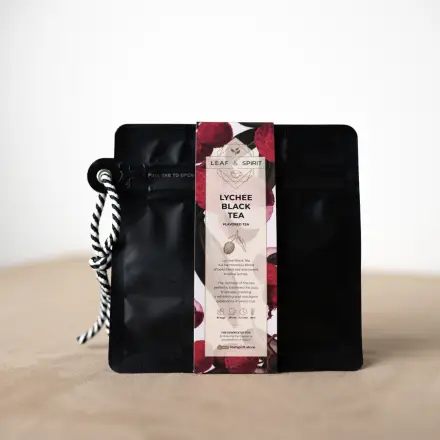
Taste the pairing in our lychee black tea - bold Yunnan leaf with real lychee pieces (more in the black tea collection).
How it's harvested and prepared
Lychee is the signature fruit of Lingnan in southern China, and Guangdong alone grows about half the country's crop. The season is short - roughly May to late July, varieties ripening one after another, and the fruit is hand-picked, clipped from the branch the moment its skin turns red. Its defining trait for tea is impatience: the aroma and freshness fade within days of picking, which is exactly why lychee gets captured into tea or dried.
Two of the routes use the real fruit. The classic is scenting, done like jasmine tea: fresh lychee is layered with gongfu black tea - traditionally Yingde black from Guangdong, until the leaf drinks in the aroma, then the fruit is removed and the tea dried. This is Lychee Congou (lizhi hongcha), and no fruit stays in it, only scent. The tea itself appeared in Guangdong's tea trade in the 1950s, and the old romance about couriers and Yang Guifei is about the fruit itself, not the origin of this tea. The second route blends in real dried lychee pieces as visible inclusions. A third adds lychee flavouring directly, and the leaf comes out plain.
On our shelf
Our lychee black tea carries real dried lychee pieces over a bold Yunnan leaf - the inclusion style, so you get both the aroma and the fruit. Lychee is also a ฿40 add-on in the blend builder, and our rose-on-black starter preset takes on new colours if you drop dried lychee pieces into it.
Does lychee tea always contain real fruit?
No, it depends entirely on the style. The traditional scented kind, Lychee Congou, holds only the fruit's aroma and no lychee at all, and the third style, added flavouring, leaves the fruit out as well. Blends like our lychee black tea work the other way, with real dried lychee pieces you can see in the leaf.
Shop Black Tea in our catalog →
Notes on traditional properties are part of Chinese tea culture and are not medical advice.