
Chrysanthemum Tea: Tai Ju, Hangbaiju and How to Brew It
Updated 2026-09-15
Reviewed by tea master Ms. Judy (Wang Mengyu)
Chrysanthemum (ju hua, 菊花) is one of the great flowers of Chinese tea. The small white and yellow blossoms have been brewed in China for more than a thousand years, on their own and alongside tea.
Taste and aroma in tea
A chrysanthemum infusion is pale and honeyed-herbal, with a light noble bitterness and a long floral finish. The most famous blossoms are grown around Hangzhou (hangbaiju, 杭白菊) and in Huangshan. In blends chrysanthemum works well with oolong and especially with ripe pu-erh: the famous juju-pu pairing (菊普) - chrysanthemum with pu-erh - softens the earthiness of aged tea and freshens the cup.
In the Chinese tradition
The chrysanthemum is the flower of autumn and one of the “Four Gentlemen” of Chinese culture, a symbol of endurance and clarity. In traditional thinking its infusion is “cooling”: chrysanthemum is said to help with heat and tired eyes, to brighten the gaze and calm irritation. So chrysanthemum tea is taken on hot days, after long work and after rich meals.
How to brew
Brew the blossoms with water at 90–95 °C; they float up quickly and give their flavour within the first minute. Chrysanthemum holds several infusions, growing softer and sweeter with each one.
How it is harvested and prepared
Chrysanthemum for tea is picked in late autumn - October into November - across eastern China, on dry sunny days once the dew has burned off - a dry flower comes through processing clean and keeps its pale colour, so the pickers wait for the right morning. Growers work in several passes a few days apart: the first, of still-closed buds, is “tai ju” and the most prized grade; later passes with half-open flowers become the everyday drinking grades. The classic tea variety is hangbaiju, the Hangzhou white chrysanthemum, grown around Tongxiang in Zhejiang for centuries.
In the Tongxiang hangbaiju tradition the fresh flowers are steamed and sun-dried the traditional way. They rest thin for a couple of hours to shed surface water, take a brief steaming that stops oxidation - under-steamed flowers darken, over-steamed ones go flat - then dry on bamboo screens over several days, with an indoor airing stage in between. The steamed blooms press together, which is why old-style hangbaiju arrives as flat, cake-like sheets. Gongju, the tribute chrysanthemum from the Huangshan area of Anhui, is oven-dried instead of steamed.
On our shelf
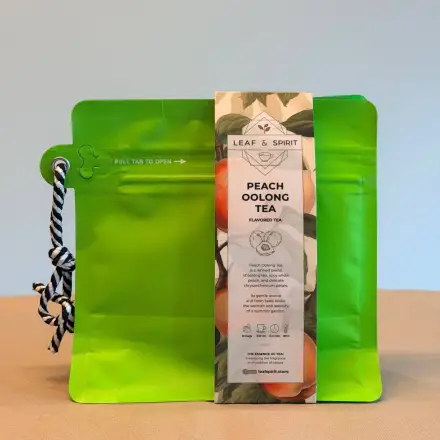
Our Peach Oolong sets chrysanthemum against white peach over a smooth oolong base - the flower’s light bitterness keeps the fruit from turning sugary. It rides along in our caffeine-free floral & fruit blend too, next to rose, jasmine and peach. And in the blend builder chrysanthemum is an add-on at 40 ฿ a portion, up to three - the classic move is a pinch over ripe pu-erh for that juju-pu (菊普) freshness.
Which chrysanthemum is best for tea?
The tea grades are the white hangbaiju from around Tongxiang in Zhejiang and gongju, the tribute chrysanthemum from the Huangshan area of Anhui. The most prized pick is “tai ju”, the first pass of still-closed buds; later passes with open flowers give the everyday grades. For a clean, honeyed cup, look for pale, whole, sweet-smelling flowers, not dark or crumbled ones.
Notes on traditional properties are part of Chinese tea culture and are not medical advice.