
Orange Peel in Tea: Dried Sweet Orange, Not Chenpi
Updated 2026-09-15
Reviewed by tea master Ms. Judy (Wang Mengyu)
The orange (cheng, 橙) is a native of China - citrus has been cultivated here for thousands of years, and the word itself sounds like 成, “success”, which is why bowls of oranges and tangerines appear on every table at Chinese New Year.
Taste and aroma in tea
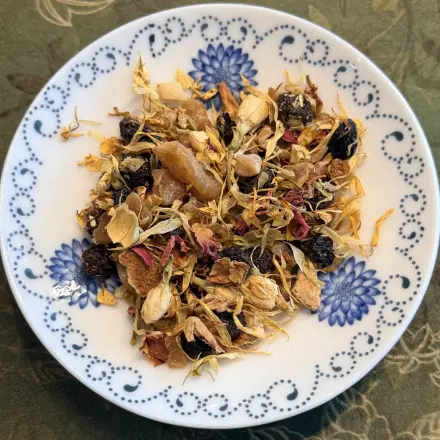
In blends orange usually comes as dried peel or fruit pieces: a zesty, sunny top note with a gentle bitterness that balances the sweetness just right. It brightens black tea, lifts floral blends out of heaviness, and gives caffeine-free infusions the sparkle a citrus alone can provide - the flavour builds slowly, steep after steep, as the peel softens.
In the Chinese tradition
Chinese tea culture holds citrus peel in special esteem: aged mandarin peel, chenpi (陈皮), is a treasure that only grows more valuable with the years - “old peel is worth more than gold”, the saying goes - and ripe pu-erh aged inside a small mandarin is a beloved classic. In traditional thinking citrus peel moves qi and helps digestion, which is why it follows a rich meal so well.
How to brew
Brew blends with orange at 90–95 °C; the peel is generous but unhurried, opening fully from the second infusion. Such blends hold several steeps and make an excellent iced tea.
How it is harvested and prepared
Orange comes into a blend as dried peel, and the peel is picked by hand - often snipped with scissors so neither skin nor branch is torn. In the classic peel tradition of Xinhui in Guangdong, mandarins are taken at several stages: green fruit in early autumn through fully "red", ripe peel around December.
After picking, the peel is opened in one connected piece and the bitter white pith is scraped from the inside by hand, so it dries clean and sweet; then it goes out in the sun, turned often, until hard and crisp. The fragrance is citrus-peel oil, mostly limonene. It keeps illustrious company: aged Xinhui mandarin peel is chenpi (陈皮), a protected specialty from Citrus reticulata. What we drop into a blend is bright dried sweet-orange peel - sunnier, more immediate, a pleasure of its own, and we call it what it is.
On our shelf
Orange brightens our Caffeine-Free Floral & Fruit Blend, alongside rose, jasmine, peach and coconut. It also seeds one of the builder's ready-made starting points - ripe shou pu-erh with orange and osmanthus. In the blend builder orange peel is a 40 ฿ add-on, up to three parts of a 100 g pouch: the citrus lift we drop into a heavy black or floral cup.
Is dried orange peel the same as chenpi?
No. Chenpi is aged peel from the Xinhui mandarin (Citrus reticulata), sun-dried and stored for years; a blend made with sweet-orange peel (Citrus sinensis) is simply dried orange peel. Both smell of citrus oil, but only the aged mandarin peel earns the name chenpi.
Notes on traditional properties are part of Chinese tea culture and are not medical advice.