
The Chinese Incense Ceremony: Tools and Ritual
Updated 2026-08-29
Reviewed by tea master Ms. Judy (Wang Mengyu)
Xiangdao (香道, "the way of incense") is the Chinese art of preparing and appreciating fine incense: a sliver of aloeswood or sandalwood warmed over charcoal buried in ash - heated, never burned. It is not jingxiang (敬香), the joss-stick offering at a temple altar. That rite petitions the gods. Xiangdao asks only that you sit still and smell.
From Song-dynasty studies to the tea table
Incense appreciation took its mature form under the Song dynasty (960–1279), when it ranked among the four pastimes of the scholar's studio. The Song writer Wu Zimu lists them in one breath: burn incense, brew tea, hang paintings, arrange flowers - half of them arts of nose and tongue.
The practice crossed to Japan and became kōdō - which is why most incense vocabulary online is Japanese. In China the ceremony faded, returning only in recent decades - carried back, fittingly, by tea people. Where gongfu tables revived, censers followed.
What tools does an incense ceremony need?
Seven tools cover the classical method: a censer (xianglu, 香炉) filled with fine white ash, an ash press, a feather brush for stray dust, metal chopsticks for the charcoal, a small scoop, a mica plate (yunmupian, 云母片), and the wood itself. The powder path adds a seal mold (xiangzhuan, 香篆) and a tamper.
Most of the kit serves the ash. Pressed and vented well, it holds a buried coal at low, even heat all session - a hand-built oven the size of a rice bowl. The mica plate separates coal from wood: the incense warms without touching fire. Smoke means something went wrong.
The ritual, step by step
The sequence rarely changes: shape the ash, bury the coal, seat the mica, warm the wood, pass the censer. Loosen the ash and press it into a low mound. Light a charcoal ball, give it ten minutes until it glows gray to the core, bury it, open a thin air channel with one chopstick.
Mica over the channel, a sliver of aloeswood on top - resinous Aquilaria heartwood, grown across Southeast Asia, Thailand included. Now wait. Scent arrives in a minute or two: cool first, then honeyed, then darker. Each guest cups the censer in the left palm, guides the air with the right, takes three slow breaths, passes it on.
The powder method forgives beginners. Level the ash, set the mold, fill the pattern with powder, tamp lightly, lift straight up, light one end. At our table a palm-sized seal burns for about half an hour - the length of a good tea session.
Incense and tea at our tea house in Phuket
Song scholars kept incense and tea on one table, and so do we. At Leaf & Spirit a seal burns while guests settle and dies before the first pour of gongfu cha - scent and tea aroma should take turns, never compete. Sandalwood suits roasted oolong and shou pu-erh; an aged sheng deserves the quieter company of aloeswood.
Both incense sets on our shelf serve the powder path. The Chinese Incense Ceremony Tool Set covers shaping and pressing the powder; The Art of Incense Set packs the same work into a fabric case. The gentlest entry needs no skill: a backflow cone on the Fog Incense Holder, smoke spilling down like cold fog. For stick incense there is the Stone Guardian holder, carved heavy enough to sit still. The rest of our ceramics live in the tea ware collection.
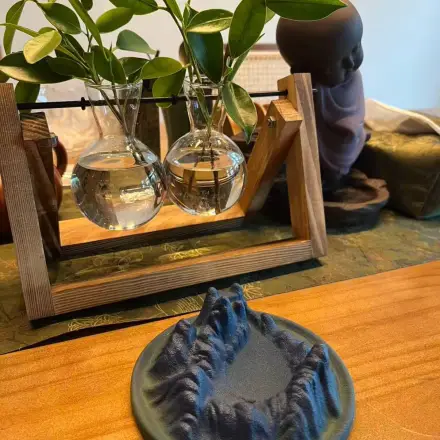
Come by - 101 Cherng Talay Road, daily 10:00–18:30 - and ask for the censer. Attention trained on one thread of scent finds more in the next cup. That, more than any tool, is the ceremony.
Shop Tea Ware in our catalog →
Notes on traditional properties are part of Chinese tea culture and are not medical advice.
Buy from the tea house shelf
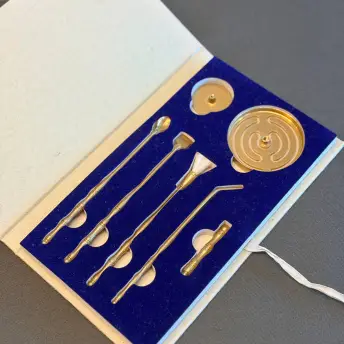 Chinese Incense Ceremony Tool Set
1200 THB
View product
Chinese Incense Ceremony Tool Set
1200 THB
View product
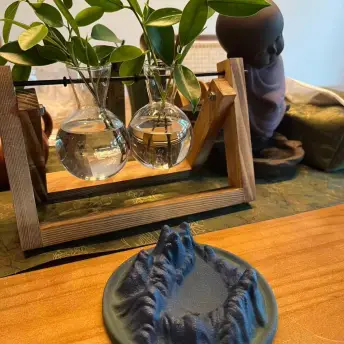 Fog Incense Holder
750 THB
View product
Fog Incense Holder
750 THB
View product
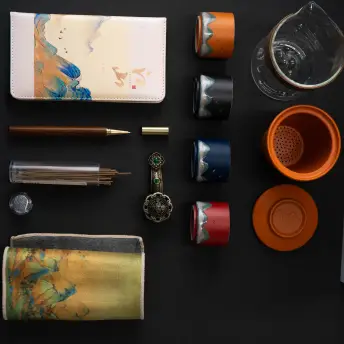 Tea & Inspiration Gift Set
2700 THB
View product
Tea & Inspiration Gift Set
2700 THB
View product
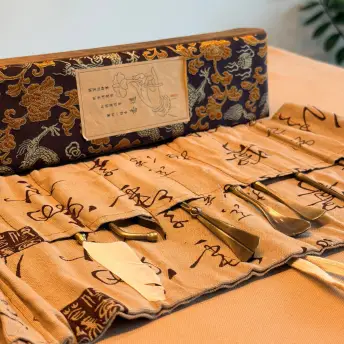 The Art of Incense Set
850 THB
View product
The Art of Incense Set
850 THB
View product