
How to Brew Pu-erh Tea (Gongfu Method)
Updated 2026-09-28
Reviewed by tea master Ms. Judy (Wang Mengyu)
Gongfu brewing (gongfu cha, 功夫茶, "tea with skill") means plenty of leaf in a small vessel and steeps counted in seconds. For pu-erh: 5 g per 100 ml in a gaiwan, one five-second rinse, then 10–15-second infusions. Full boil for ripe (shou), 90–95 °C for young raw (sheng). We brew this way at our Phuket counter daily.
What water temperature does pu-erh need?
Shou takes water straight off the boil, 95–100 °C. Young sheng prefers 90–95 °C: hotter water pulls out bitterness faster than aroma. Aged sheng, ten years and up, drifts back toward a full boil. One number to remember: 95.
Wet-piled shou is dark and settled, hard to offend. Young sheng keeps the raw nerve of sun-dried leaf and punishes careless heat. How one leaf becomes two teas: sheng vs shou.
Gongfu brewing, step by step
The ratio: 5 g per 100 ml. Rinse once, five seconds, pour away. First real steep: 10–15 seconds, drained to the last drop. Add five seconds each round after.
- Break off the leaf. Pu-erh comes pressed into cakes. Slide a pick into the side and lift along the layer; chopping down shreds the leaf, and shreds brew bitter.
- Warm the gaiwan. Fill with hot water, empty. Warm walls hold the heat.
- Dose. Our ancient tree raw sheng mini cake (2014 harvest, trees over 400 years old) weighs 12 g.
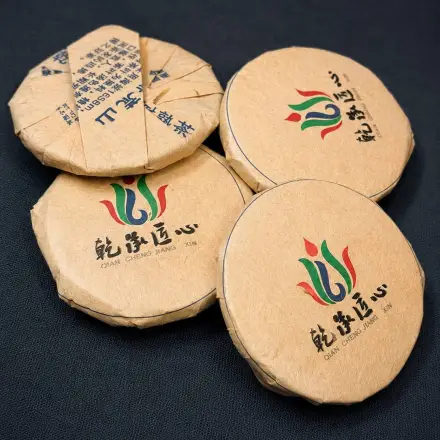
- Rinse. Cover the leaf, count five, discard: the pour softens the pressed cake and carries off storage dust.
- Pour off completely. Leftover water keeps brewing and turns the next cup harsh.
How many infusions? An aged sheng cake holds ten to fifteen, changing cup to cup. The mini cakes give an honest six to eight. Stop at faintly sweet water. The rest of the method is in our gongfu cha guide.
Fixing a bitter or flat brew: notes from our tea counter
Bitter means too much heat or too much time. Drop to 90 °C and cut steeps to five seconds. Check the leaf went in whole. Flat usually means a tight shou that never woke up: rinse twice with a rolling boil and judge after the third round.
The mistake we see most at tastings: young sheng brewed like shou - boiling water, a long steep, a grimace. Same leaf at 90 °C for ten seconds, and the guest asks for a second cup.
Phuket adds its own physics. In 32-degree air a kettle stays hot enough for two rounds; for shou we re-boil after that. We use soft filtered water; hard water dulls the aroma. Watch it live at a tea ceremony at Leaf & Spirit.
No gaiwan? A simple fallback
A mug or small teapot works: 5 g per 300 ml, 95 °C, 2–3 minutes. Still rinse the leaf first. The portion re-steeps two or three times, each a minute longer.
Less theatre, same tea. Everything on our pu-erh shelf, from that 2014 ancient-tree harvest to a 2023 Menghai cake, we drink at the counter before we sell, and we deliver across Thailand.
FAQ
Do I have to rinse pu-erh before drinking?
Yes: one five-second pour of hot water, discarded, wakes the pressed leaf and rinses away storage dust. A tight shou cake can take two.
How many times can I brew the same leaves?
Six to eight steeps for mini cakes, ten to fifteen for an aged cake. A session can pause, too: leaves under a tilted lid brew again hours later.
Can I brew pu-erh without a scale?
A portioned mini cake solves it: one session, a large gaiwan or small teapot. For loose leaf, cover the bottom in one loose layer - close enough to 5 g.
Shop Pu-erh Tea in our catalog →
Notes on traditional properties are part of Chinese tea culture and are not medical advice.
Buy from the tea house shelf
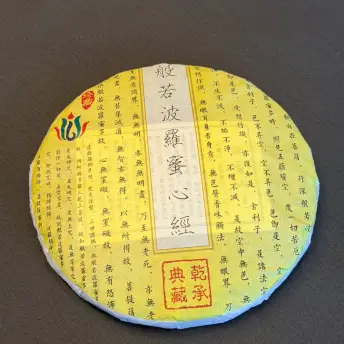 Wuliang Mountain Sheng Pu-erh (2019)
from 1300 THB
View this tea
Wuliang Mountain Sheng Pu-erh (2019)
from 1300 THB
View this tea
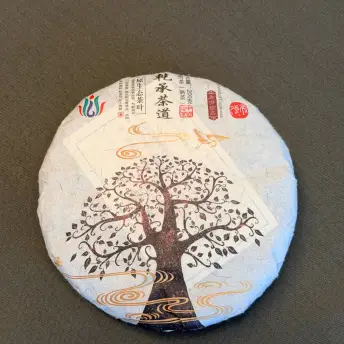 Imperial Gong Ting Ripe (Shu) Pu-erh (2018)
from 750 THB
View this tea
Imperial Gong Ting Ripe (Shu) Pu-erh (2018)
from 750 THB
View this tea
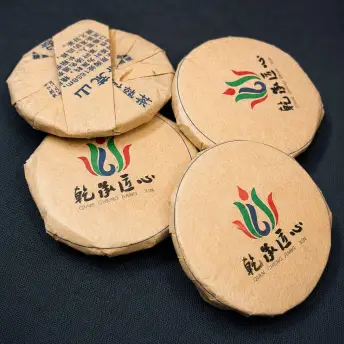 Ancient Tree Raw Pu-erh (Sheng) Mini Cake
from 140 THB
View this tea
Ancient Tree Raw Pu-erh (Sheng) Mini Cake
from 140 THB
View this tea
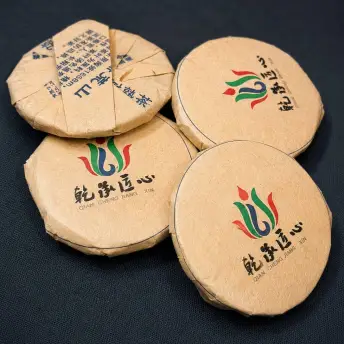 Ancient Tree Ripe Pu-erh (Shou) Mini Cake
from 130 THB
View this tea
Ancient Tree Ripe Pu-erh (Shou) Mini Cake
from 130 THB
View this tea