
Lemongrass Tea: What It Tastes Like and How to Brew It
Updated 2026-09-13
Reviewed by tea master Ms. Judy (Wang Mengyu)
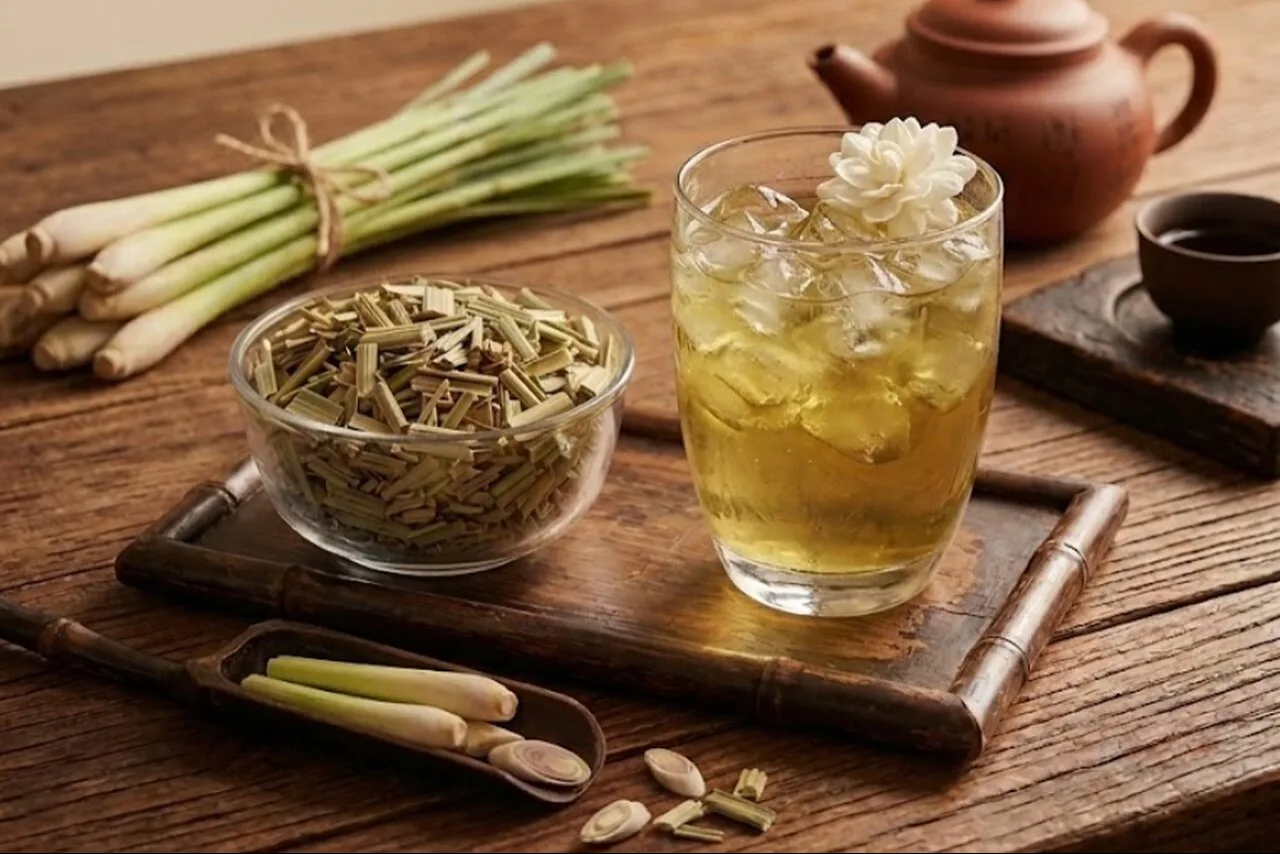
Lemongrass (xiangmao, 香茅) is a grass, not a tea leaf. What gets brewed is the lower, pale part of the stalk - dense and the most aromatic part of the plant. Dry, it smells of lemon zest; in the cup it gives a clear, pale gold infusion with a very light, almost weightless body.
Taste and aroma in tea
Citrus without acidity is perhaps the most interesting thing about lemongrass. Dry, it smells almost like lemon peel, but the cup has none of that sourness. Instead there is a clean, soft taste with a light grassy sweetness. The aroma comes from citral, one of the compounds that gives lemon its recognisable scent.
There is no caffeine in lemongrass and no pronounced astringency either, so even a longer steeping usually stays soft, without noticeable bitterness.
In Chinese and Thai cups
In Thailand lemongrass lives in the kitchen first - in soups, curries and sauces - and only then in the glass: cold, over ice and lightly sweetened, the sort of drink you meet at any market or café. In southern China xiangmao is used much the same way: mostly in cooking, and as an infusion especially in hot weather.
At the tea house it has a role of its own. It is a good choice for the evening, when you want something hot and fragrant but without caffeine. It sits between matum, sweeter and rounder, and mint, cooler and sharper.
How to brew
About 5 g per 300 ml, water just off the boil, five to ten minutes. Five minutes gives a light, very fresh cup; ten gives a fuller, more herbal one, still without noticeable bitterness.
The same stalks take a second brew, just add another minute or two. For iced lemongrass it is better to make the infusion twice as strong and pour it over ice - the aroma survives the cold well, which is why the drink is so popular in Thailand.
How it is harvested and prepared
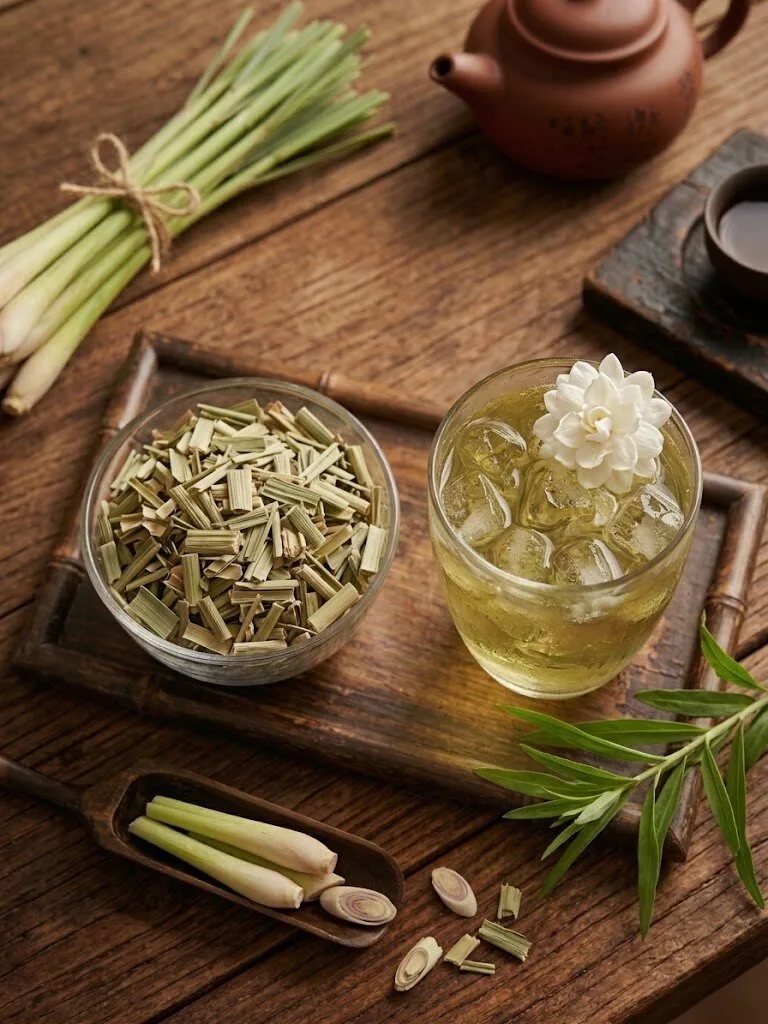
Stalks are cut at ground level, and only the bottom fifteen centimetres or so are kept: higher up the leaf is fibrous and carries little aroma. The cut section is sliced into rings a few millimetres thick, which is what the whole drying rests on: whole stalks dry unevenly and go musty in the middle.
Drying is done in shade or at low heat, because citral evaporates. Good dried lemongrass keeps a pale green-grey colour and snaps cleanly; yellowed rings that bend instead of breaking have already lost their aroma.
On our shelf
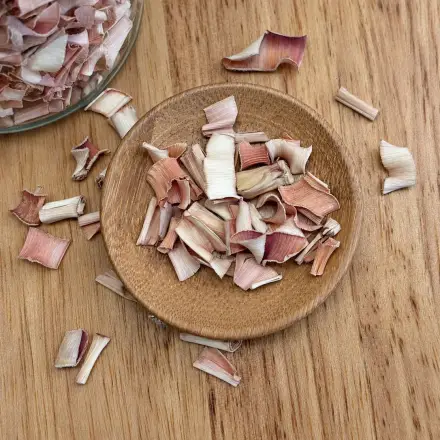
Our lemongrass comes from northern Thailand, in 100 and 250 g pouches. It is the cheapest thing we sell by weight, and the one that most often leaves with guests as a last-minute souvenir: it weighs almost nothing.
In the blend builder it works as a lift on a green base, and it pairs unexpectedly well with mint: the two cover different parts of the same freshness.
Does lemongrass tea have caffeine?
None at all. It is a herbal infusion made from a grass stalk, not from the tea plant, so it can be drunk late in the evening and given to children.
Can lemongrass be over-brewed?
Practically not. There are no tannins, so nothing turns bitter or astringent - a forgotten cup simply becomes stronger and rounder.
Fresh or dried lemongrass for tea?
Fresh lemongrass gives a greener, brighter infusion, but the stalk is best bruised before brewing so it releases its aroma faster. Dried is a little calmer in taste, but more concentrated, keeps well and travels easily.
For a pot at home dried is simply more convenient: no preparation, long shelf life, always ready to brew.
Notes on traditional properties are part of Chinese tea culture and are not medical advice.