
How to Store Pu-erh Tea for Aging
Updated 2026-09-28
Reviewed by tea master Ms. Judy (Wang Mengyu)
Pu-erh is the one tea people lay down for years, and storage decides what those years give back. The Chinese call it cang cha (藏茶) - putting tea away. A cake is alive: microbes and enzymes keep working inside the pressed leaf. Give them air and a little moisture, and the tea deepens. Seal them off, and it stalls.
What Pu-erh Needs to Age Well
Store pu-erh dark, odor-free, at stable room temperature, with 60–70% relative humidity and gentle airflow. Keep cakes in their paper wrappers inside a breathable container - a cardboard box or a clay jar - away from the kitchen.
Aging is slow microbial work, and moisture keeps it going. Below roughly 50% humidity a cake goes dormant and the taste thins out. Above 80% for weeks, mold moves in. Heat is the same: a shelf drifting between 20 and 30 °C is fine; a baking attic or a fridge will stop the tea.
Where Should You Keep Pu-erh at Home?
A cupboard or an open shelf in a living room, away from kitchen smells and bathroom damp. Leave every cake in its cotton-paper wrapper - it keeps out light and dust while the leaf still breathes - and group the cakes in a cardboard box or an unglazed clay crock. Keep sheng apart from shou: the earthy aroma of ripe pu-erh slowly seeps into any raw cake beside it.
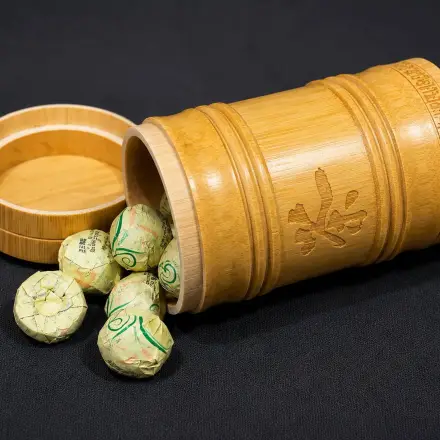
Bamboo has done this job on the tea roads for centuries. It breathes and adds no smell of its own - which is why our bamboo caddy of mini pu-erh cakes is wrapped the way caravan tea once was.
What Ruins an Aging Pu-erh Cake
Four enemies: strong odors, direct sun, sealed plastic and mold. Tea is a sponge for smells - coffee, spices and scented cleaners all end up in the cup. Sunlight bleaches the leaf and turns the liquor flat within weeks. Airtight packaging cuts the leaf off from the natural air exchange that slow maturation depends on.
Mold is a different story. If a cake smells musty and shows fuzzy white, grey, green or black patches, it is better not to drink it: real mold cannot be reliably removed by brushing or drying - the mycelium may have worked deep into the cake. A thin white bloom with no damp smell is another matter: that may be the natural "white frost" of a well-aged pu-erh, not mold.
How We Age Pu-erh in Phuket - and How Long It Takes
Phuket's climate sits close to the traditional Hong Kong and Malaysian storage that matured cakes for a century: warm all year, with humidity past 80% in the monsoon months. Our problem is the opposite of a European collector's - never too dry, sometimes too wet. So our cakes rest in paper on wooden shelves in a back room, away from the brewing counter and off the outer wall, with a fan moving the air on the dampest days. No fridge, no plastic. Once a month we pick up every cake and smell it.
Warm, humid storage is also fast storage. Our Wuliang Mountain sheng 2019 shows it: at seven years, the youthful bite has already rounded into wild herbs, dried fruit, wood and floral honey.
How long until a cake is ready? Young sheng changes noticeably in three to five years and keeps going for decades; shou is made ripe by wet-piling and only needs a year or two of airing to settle. Taste the same cake once a year, five grams at a time, and write down what you find. The cake becomes a diary you can drink.
FAQ
Can you store pu-erh in the fridge?
No. Cold, sealed air stops the microbes that age the cake, and fridge smells soak straight into the leaf. A steady room shelf at 20–30 °C with 60–70% humidity is all it takes.
Can a moldy pu-erh cake be saved?
It depends on what you are calling mold. Fine tea hairs and the natural white bloom of aged pu-erh ("white frost") are often mistaken for it.
If the cake carries fuzzy white, grey, green or black patches with a damp, musty smell, it is better not to drink it. Even if you brush off what you can see, the mycelium may already be inside the leaf, so cleaning and drying cannot guarantee safety.
When in doubt, inspect the rim and the dimple on the back first - problems show there earliest. If suspicion remains, letting the cake go is better than the risk.
How long until pu-erh is ready to drink?
Young sheng rounds out noticeably in three to five years and keeps developing for decades. Shou was made ripe by wet-piling - a year or two of airing settles it.
Shop Pu-erh Tea in our catalog →
Notes on traditional properties are part of Chinese tea culture and are not medical advice.
Buy from the tea house shelf
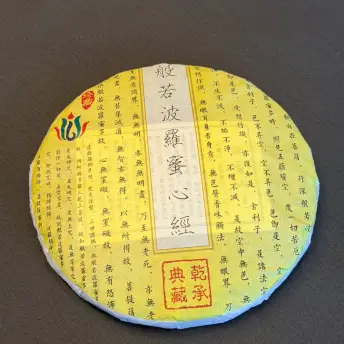 Wuliang Mountain Sheng Pu-erh (2019)
from 1300 THB
View this tea
Wuliang Mountain Sheng Pu-erh (2019)
from 1300 THB
View this tea
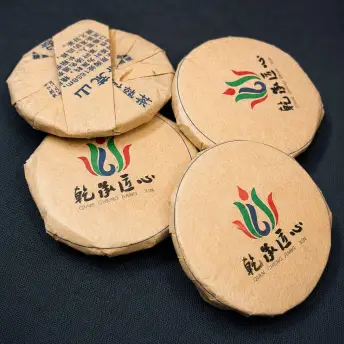 Ancient Tree Raw Pu-erh (Sheng) Mini Cake
from 140 THB
View this tea
Ancient Tree Raw Pu-erh (Sheng) Mini Cake
from 140 THB
View this tea
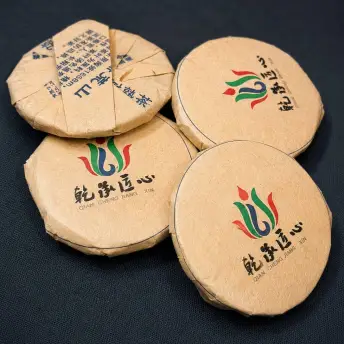 Ancient Tree Ripe Pu-erh (Shou) Mini Cake
from 130 THB
View this tea
Ancient Tree Ripe Pu-erh (Shou) Mini Cake
from 130 THB
View this tea
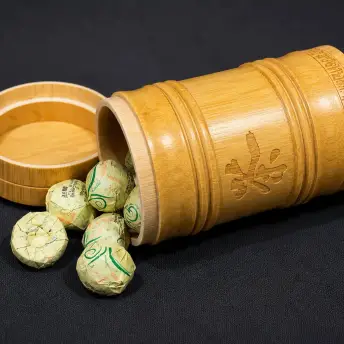 Bamboo Tea Caddy with Mini Pu-erh
from 910 THB
View this tea
Bamboo Tea Caddy with Mini Pu-erh
from 910 THB
View this tea