
Cold Brew Tea: Ratio, Timing and the Teas That Shine
Updated 2026-09-28
Reviewed by tea master Ms. Judy (Wang Mengyu)
Cold brew tea is leaf steeped in cold water - 5–6 g per litre, 8–12 hours in the refrigerator, strain and pour. Cold water pulls out sweetness and aroma but leaves most of the tannin behind, so the cup comes out smooth, clear and sweet with no sugar. In Phuket heat we make it every day.
What is cold brew tea, and why is it smoother?
Hot water opens a leaf in minutes and takes everything at once: fragrance, sweetness, and the tannins that turn a forgotten cup bitter. Cold water works differently. At fridge temperature the tannins mostly stay in the leaf, while sugars and aroma compounds keep dissolving hour after hour.
The result surprises people. The same peach oolong that pours warm and floral from a gaiwan comes out of the fridge tasting like chilled peach nectar - no bitterness to hide, nothing to sweeten.
How to cold brew loose leaf tea
The numbers from our counter: 5–6 g of leaf per 1,000 ml of cold filtered water. A glass bottle or jug with a lid is all the equipment there is.
- Dose. 5–6 g per litre - for rolled oolong pearls that is roughly two tablespoons.
- Fill and close. Cold filtered water, lid on, straight into the refrigerator.
- Wait. Green tea is ready in 6–8 hours; oolong and black want 8–12. Overnight fits both.
- Strain and pour. Ice is optional - the tea is already cold.
Keep the finished brew in the fridge and drink it within a day or two; cold brew is fresh tea, not a bottled drink.
No scales, no strainer? Our naturally scented classics come as silk pyramids: drop 2 pyramids into a litre of cold water, refrigerate overnight, lift them out. That is the entire recipe.
Which teas are best for cold brewing?
Almost any good leaf survives cold water; a few genuinely bloom in it. Five from our shelf that we cold brew ourselves:
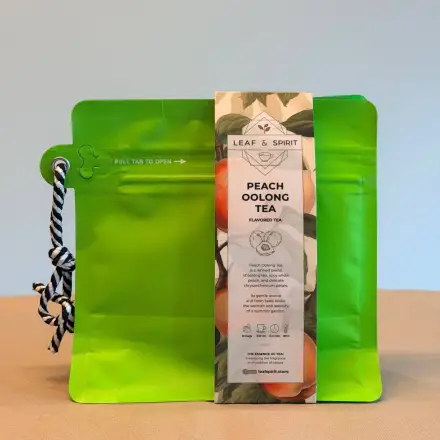
- Peach Oolong - juicy and honeyed; the closest tea gets to peach juice.
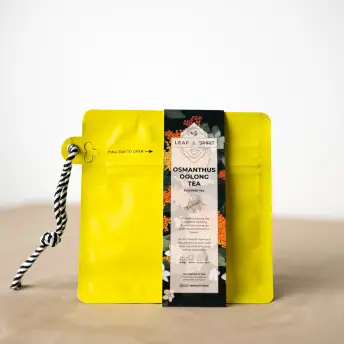
- Osmanthus Oolong - apricot and honey over a clean oolong base.
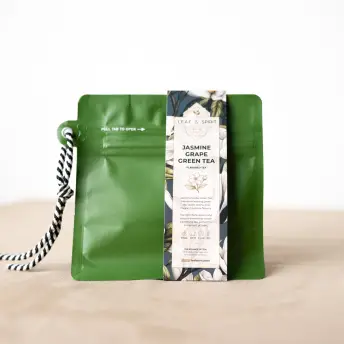
- Jasmine Grape Green Tea - the lightest of the five; jasmine stays, grassiness never arrives.
- Lychee Black Tea - dark tea without the tannic grip, all fruit.
- Rose Black Tea - quiet rose, cool finish.
Single-origin teas work too - a light oolong turns crystalline, a green loses every trace of bite. Dark roasted styles and shu pu-erh are the exception: they want heat, and cold water leaves them thin.
Cold brew at a Phuket tea counter
We started cold brewing out of necessity: at 32 °C nobody asks for a boiling gaiwan at noon. Now a bottle of overnight peach oolong lives in the tea house fridge through the hot season, and guests who swear they only drink coffee finish a glass and ask what it was.
In Choeng Thale, just come by and we will pour you a glass. For the rest of Thailand there is delivery: all five teas above live in the tea catalog, and cold brewing takes the same pouch as hot.
FAQ
How long does cold brew tea keep?
One to two days in the refrigerator, in a closed bottle. After that the aroma fades and the infusion turns dull - brew smaller batches instead of storing it.
Does cold brew tea have less caffeine?
Generally yes. Cold water extracts caffeine more slowly than hot, so an overnight cold brew usually carries less than the same leaf brewed hot - though leaf amount and time matter more than temperature alone.
Can I reuse the leaves after cold brewing?
Once, if you are curious: a short hot steep will pull out what the cold water left. In practice the first cold infusion takes the best of the leaf, so we usually compost it and start fresh.
Notes on traditional properties are part of Chinese tea culture and are not medical advice.
Buy from the tea house shelf
 Peach Oolong
from 280 THB
View this tea
Peach Oolong
from 280 THB
View this tea
 Osmanthus Oolong
from 280 THB
View this tea
Osmanthus Oolong
from 280 THB
View this tea
 Jasmine Grape Green Tea
from 280 THB
View this tea
Jasmine Grape Green Tea
from 280 THB
View this tea
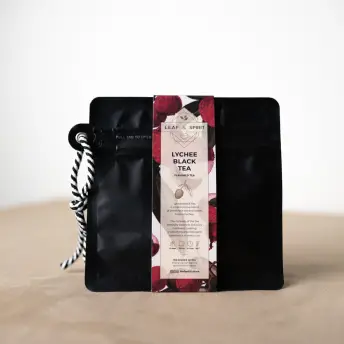 Lychee Black Tea
from 280 THB
View this tea
Lychee Black Tea
from 280 THB
View this tea
 Rose Black Tea
from 280 THB
View this tea
Rose Black Tea
from 280 THB
View this tea