
Chinese Tea Types: The Six Categories
Updated 2026-08-29
Reviewed by tea master Ms. Judy (Wang Mengyu)
Chinese tea comes in six categories: green, white, yellow, oolong, red (the tea the West calls black) and dark, the family that includes pu-erh. All six are made from one plant, Camellia sinensis. What separates them is processing: above all, how far the leaf is allowed to oxidise after picking.
| Type | Oxidation | Taste in a phrase | Water |
|---|---|---|---|
| Green | Stopped at once with heat | The freshness of spring | 75–85 °C |
| White | Withered and dried, nothing more | Forgiving; ages beautifully | 85–90 °C |
| Yellow | Green plus men huang rest | Rounder, grassy edge melted away | 80–85 °C |
| Oolong | Interrupted midway | Lilac-fresh to ember-dark | 85–95 °C |
| Red | Full | Warming; an evening tea | 90–95 °C |
| Dark | Post-fermented by microbes | Warming; after a heavy dinner | 95–100 °C |
What makes one leaf into six different teas?
Oxidation. Pick a leaf and its enzymes begin to darken it, the way a cut apple browns. Every Chinese tea is a decision about that process: stop it at once with heat - green. Let it run to the end - red. Interrupt it midway - oolong.
The six-category system (liu da cha lei, 六大茶类) was formalised in 1979 by scholar Chen Chuan of Anhui Agricultural University; the crafts are centuries older. Category says nothing about quality: in Fujian, farmers make white, red and oolong tea from the same hillside. The category is the recipe, not the leaf.
The six categories at a glance
Green tea (lü cha, 绿茶) is the leaf kept alive: heated within hours of picking to hold the colour and freshness of spring. Longjing from West Lake is its most famous name. More in our green tea guide; on our shelf, the green tea section.
White tea (bai cha, 白茶) is the least touched of the six: the leaf is only withered and slowly dried, no pan, no rolling. Silver Needle (Bai Hao Yin Zhen) is downy buds alone; White Peony (Bai Mu Dan) adds the first two leaves. Nearly all of it comes from Fuding and Zhenghe in Fujian, and it ages beautifully. The Fujian saying goes "one year tea, three years medicine, seven years treasure" - take the middle as poetry, not prescription.
Yellow tea (huang cha, 黄茶) is the rarest. It begins as green tea, then the warm, damp leaf rests wrapped, a step called men huang (闷黄, "sealed yellowing") that melts the grassy edge into something rounder. Junshan Yinzhen was once tribute tea for emperors; even in China a true yellow takes finding.
Oolong (wulong cha, 乌龙茶) covers the whole space between green and red: from lilac-fresh Tieguanyin to roasted, ember-dark Da Hong Pao. More in our oolong guide; milk, osmanthus and peach oolongs wait in the oolong section.
Red tea (hong cha, 红茶) is fully oxidised; the Chinese name follows the liquor, the European "black" the dry leaf. Details in the black tea guide. On our shelf there are two sections: golden-tipped Yunnan dian hong under red tea, the lychee and rose classics under black tea.
Dark tea (hei cha, 黑茶) goes one step beyond the others: microbes ferment the finished leaf, for months, sometimes decades. Its famous member is pu-erh from Yunnan. Start with our pu-erh guide; raw sheng and ripe shou cakes are in the pu-erh section.
Which Chinese tea should you try first?
Start with an oolong. At tastings in our Phuket tea house it is the first cup we pour for newcomers: it stands in the middle of the map, and every other tea sits a step greener or a step darker. Milk oolong wins most first-timers before the cup is empty.
Chinese tradition sorts teas into cooling and warming, and the tropical climate here agrees: green and white for the heat of the day, shou pu-erh after a heavy dinner, GABA oolong from Mae Salong when the evening should end slowly. Guests who arrive loyal to teabag black usually leave carrying dian hong. Beyond the six types sits our ingredient shelf - jasmine, osmanthus, lion's mane - all in the blend builder.
Tasting before choosing is what a tea house is for - see where to buy Chinese tea in Thailand.
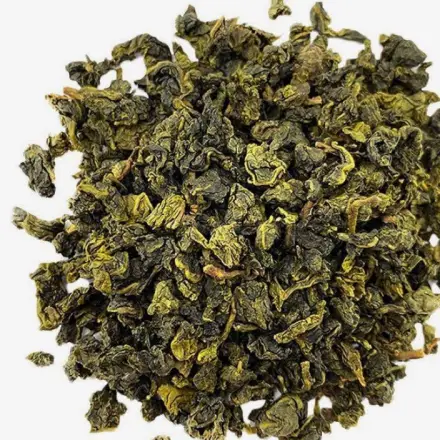
Brewing the six types: water temperature and time
One rule covers most of it: the greener the tea, the cooler the water. Green tea wants 75–85 °C; boiling water scorches it. White takes 85–90 °C and forgives long steeping; yellow, a gentler green, wants 80–85 °C. Oolong opens at 85–95 °C, red tea at 90–95 °C, and dark teas need a full 95–100 °C and a first quick pour, discarded, to loosen the pressed cake.
Our tea-bar baseline: about 3 g per 100 ml and short steeps. Good leaf is rarely finished in one pour: a rolled oolong or a pu-erh cake gives five infusions and more, each a little different.
You can read about tea types for hours, or you can taste five in one afternoon. A ceremony or a guided tasting at the tea house brews the differences side by side.
Questions we hear at the tea bar
Are all six tea types really made from one plant?
Yes. Green, white, yellow, oolong, red and dark tea all come from Camellia sinensis. Cultivar and terroir matter, but the category is decided by processing - chiefly oxidation. There is no separate "oolong tree".
Is pu-erh a black tea?
Not in the Chinese system. Pu-erh belongs to dark tea (hei cha, 黑茶), post-fermented by microbes after the leaf is processed. What the West calls black tea is hong cha, fully oxidised but never fermented. A different category, a different craft.
Which of the six types suits hot weather best?
In the Chinese tradition green and white teas are "cooling", and in Phuket we reach for them at midday, brewed light or iced. Fully oxidised and fermented teas count as warming, so red tea and shou pu-erh belong to evenings and the rainy season. It is tea custom, not medicine - but it maps onto the tropics surprisingly well.
Notes on traditional properties are part of Chinese tea culture and are not medical advice.
Buy from the tea house shelf
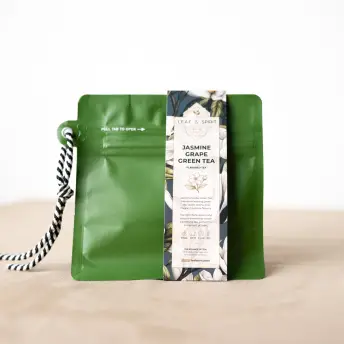 Jasmine Grape Green Tea
from 280 THB
View this tea
Jasmine Grape Green Tea
from 280 THB
View this tea
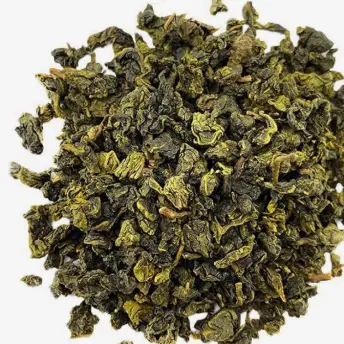 Milk Oolong
from 480 THB
View this tea
Milk Oolong
from 480 THB
View this tea
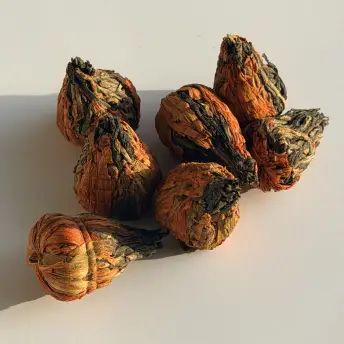 Lily Dianhong
from 550 THB
View this tea
Lily Dianhong
from 550 THB
View this tea
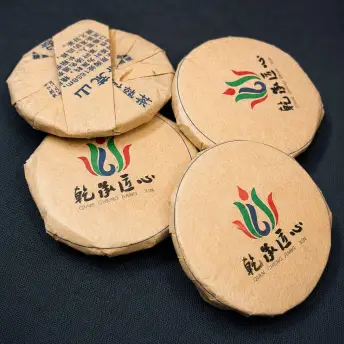 Ancient Tree Raw Pu-erh (Sheng) Mini Cake
from 140 THB
View this tea
Ancient Tree Raw Pu-erh (Sheng) Mini Cake
from 140 THB
View this tea
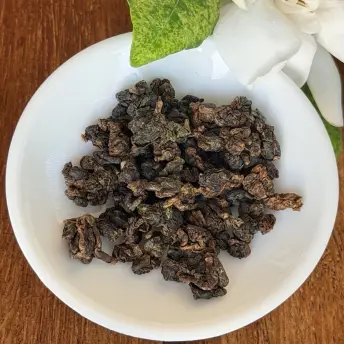 GABA Oolong Amber Smoke
from 650 THB
View this tea
GABA Oolong Amber Smoke
from 650 THB
View this tea