
Rosella (Hibiscus): the Ruby Thai Infusion and How to Brew It
Updated 2026-09-13
Reviewed by tea master Ms. Judy (Wang Mengyu)
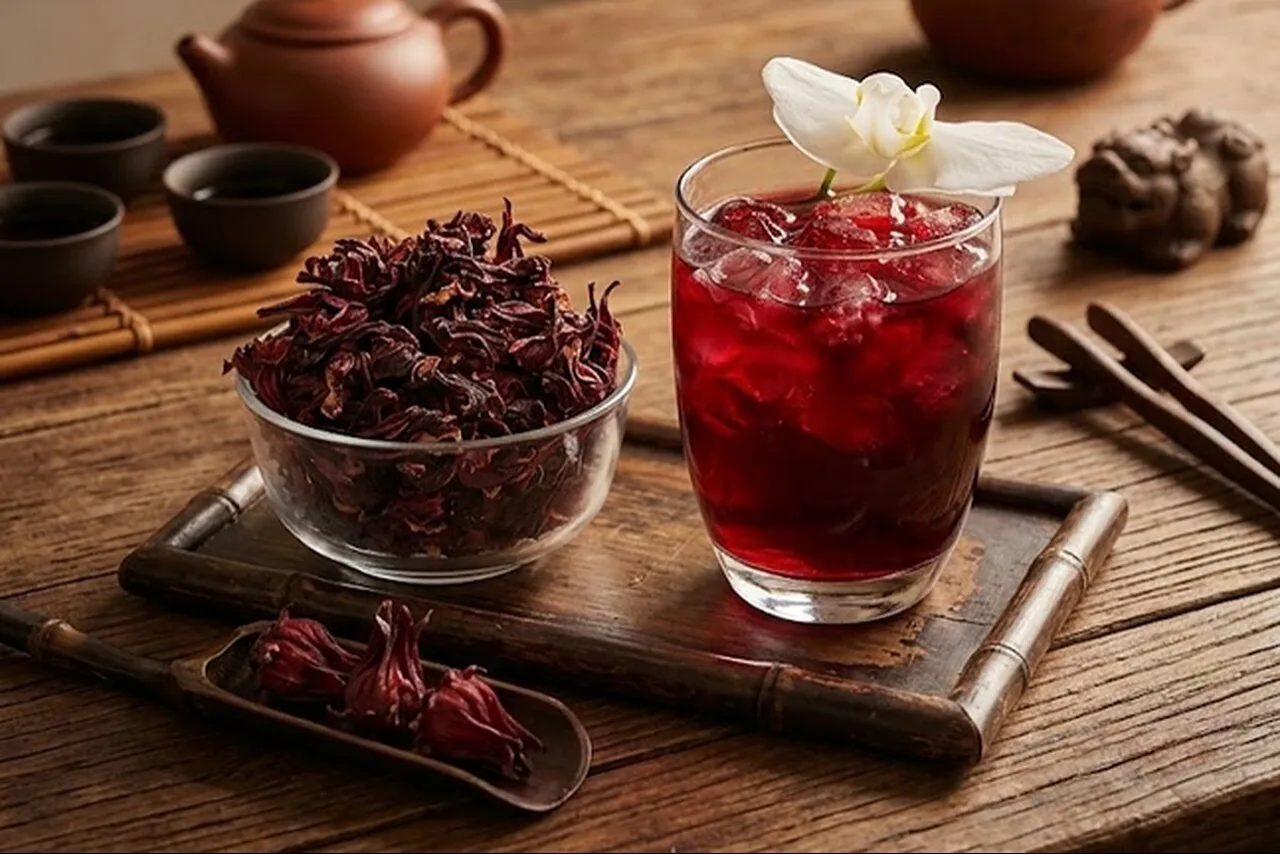
Rosella (luoshenhua, 洛神花) is not a petal and not a tea leaf. What goes into the cup is the calyx: the fleshy cup that holds the seed pod after the hibiscus bloom has dropped. Dried, it turns almost black; in hot water it gives back a ruby red so dense you can read the level of the pot through it.
Taste and aroma in tea
Tartness first, fruit second. Rosella lands closer to cranberry or redcurrant than to anything floral. There is no caffeine and no pronounced bitterness: what sometimes reads as bitter is really bright acidity, and honey or a little sweetness softens it more easily than a shorter steeping.
Half the impression is colour. The deep red comes from anthocyanins - the same plant pigments found in blueberries. As with anchan, the colour shifts with acidity: add a little lime and the infusion brightens towards scarlet.
In Chinese and Thai cups
In Thailand this is nam krachiap - น้ำกระเจี๊ยบ: a cold rosella drink sold at markets, in small cafés and from street carts. It is usually sweetened generously to soften the characteristic tartness. In southern China luoshenhua is drunk hot in winter blends, often with jujube or dried orange peel to round the acid.
We keep it on the shelf for the same reason we keep matum: a cup with no caffeine that still tastes of something. Guests who have had enough tea by late afternoon end up here.
How to brew
About 5 g per 300 ml, water just off the boil, five to ten minutes. The longer rosella steeps, the deeper the colour and the sharper the tartness. No real bitterness appears; the cup simply gets fuller and more sour. A spoonful of honey softens it nicely, and a slice of ginger works just as well.
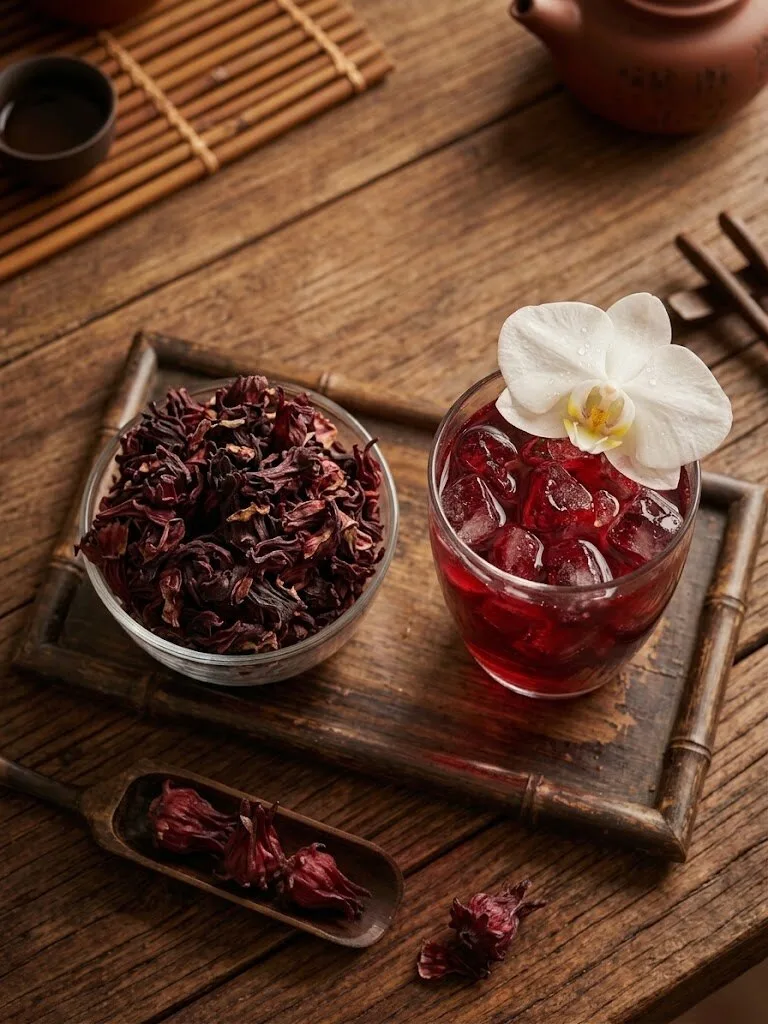
The same calyces take a second brew - paler, but still clearly red. For iced rosella, use 5 g to 500 ml of cold water and leave it in the fridge overnight: the result is clean and bright, without extra astringency and with a beautiful colour.
How it is harvested and prepared
The calyces are cut about two weeks after the flower falls, while they are still fleshy and bright: left longer, they toughen and the pod inside hardens. Growers slip the seed pod out with a metal tube, then dry the empty calyx in the sun for a few days until it is brittle.
Northern Thailand harvests from November to January, which is why good dried rosella appears in markets right after the cool season. Colour is the tell for quality: deep burgundy means it dried fast; brownish and dull means it sat damp somewhere on the way.
On our shelf
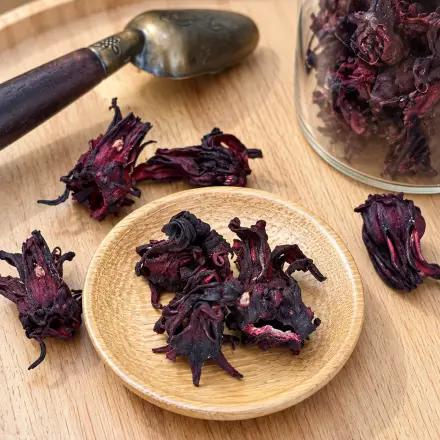
Our rosella comes from northern Thailand, in 100 and 200 g pouches. It is one of the caffeine-free things we sell by weight, next to matum, and in the afternoon it goes straight into a jug with ice.
In the blend builder it behaves like colour and acidity rather than a base: a little sharpens a fruit blend, too much takes the cup over.
Is rosella a tea?
No. Tea comes from the leaf of Camellia sinensis; rosella is the dried calyx of Hibiscus sabdariffa, a herbal infusion like chamomile. It has no caffeine at all, so it is fine in the evening.
Why is rosella so sour?
Citric and hibiscus acids, both naturally present in the calyx. The acidity is not a sign of over-steeping - it is the plant itself. Better to sweeten it than to shorten the brew, or the colour will fade along with the acid.
What does rosella go with?
The classics here are ginger, honey and lime. In a blend it sits well with fruit pieces and stronger herbs; with a delicate green tea it simply drowns everything out.
Notes on traditional properties are part of Chinese tea culture and are not medical advice.